
Event Details
Topic: Integrated Circuits and Systems for Next-Generation Tracer-Based Medical Imaging
Date and Time: October 15, at 12:00 PM
Location: MER 2.114 (also available via Zoom Meeting
ID: 895 2510 1314, Passcode: MRC-DSS)
Faculty Host: Jean Anne Incorvia
Speaker: Rahul Lall, Ph.D., Postdoctoral Fellow at Stanford University
Tracer-based medical imaging provides a powerful method of visualizing functional biological processes in vivo, beyond the structural information available from conventional anatomical imaging. This is done by functionalizing radioisotopes or magnetic nanomaterials to antibodies, small molecules, and derivatives thereof, that preferentially bind to specific cell types or receptors (e.g., cancer biomarkers).
These imaging modalities offer high molecular specificity but place demanding requirements on the electrical instrumentation responsible for detecting, conditioning, and extracting weak tracer signals, typically trading off sensitivity for temporal resolution or vice versa. Integrated circuits (ICs) have emerged as a powerful platform for not only miniaturization but also for networking of biomedical devices to enable very dense integration of high sensitivity transducer elements that can help increase temporal resolution.
In this talk, I will discuss circuit techniques at the IC-, firmware-, and system-level that help us circumvent this sensitivity-temporal resolution bottleneck in medical imaging to allow for precision functional imaging of cells, disease states, and treatment outcomes. Highlighted examples drawn from my recent research will cover diverse applications such as (1) single-γ photon and single-charged particle sensitive ICs for high-temporal resolution imaging of cancer radiopharmaceutical therapy, proton/electron-beam radiotherapy, and intraoperative radioguided tumor resection, (2) sparse sensor nuclear image reconstruction techniques for wearable medical imaging systems, and (3) broadband magnetic receiver architectures for ultra-sensitive interventional magnetic particle imaging.
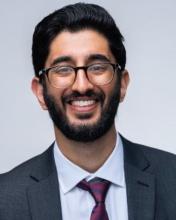
Dr. Rahul Kartikeya Lall received his B.S.H. degree in Electrical Engineering from Stanford University in 2021, graduating as a Frederick E. Terman Scholar and ranking in the top 5% of his graduating class. He received his M.S. and Ph.D. in Electrical Engineering and Computer Sciences with a focus in integrated circuit design from the University of California, Berkeley in 2023 and 2025, respectively. His research focuses on developing biomedical circuits and sensors for optimizing tracer-based molecular imaging. He was the recipient of the NSF Graduate Research Fellowship in 2021, the IEEE Intersociety Conference on Thermal and Thermomechanical Phenomena in Electronic Systems Best Paper Award in 2022, the Best of Physics Award at the American Society for Radiation Oncology Annual Meeting in 2023, the Best Student Paper Award at the 2024 Symposium on VLSI Technology and Circuits, and the IEEE Solid-State Circuits Society Predoctoral Achievement Award in 2025. He is now a NIH/NCI T32 Molecular Imaging Postdoctoral Fellow at Stanford University with a focus on magnetic approaches to cancer molecular imaging.